You want a reliable, non-stick surface that lasts decades. Seasoning a cast iron skillet creates that hard, black coating that improves flavor and prevents rust.
This guide shows the exact, repeatable steps you need—clean, oil, bake, repeat—so your pan performs like new. No guesswork, just simple cues you can follow.
How to Properly Season a Cast Iron Skillet
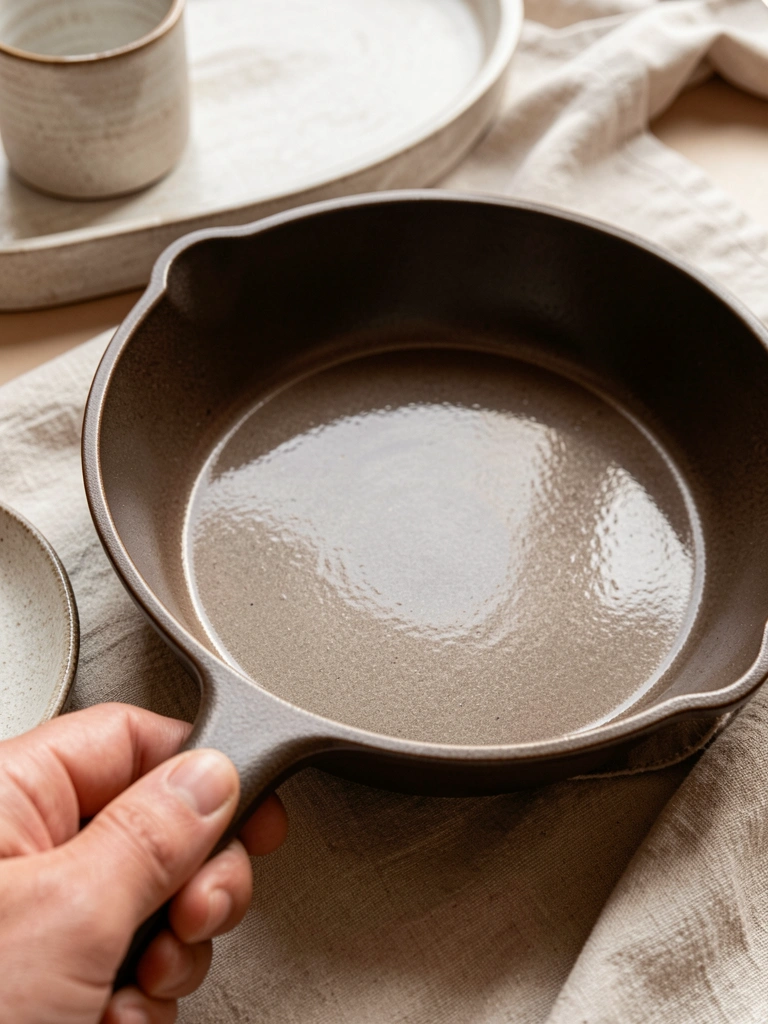
Seasoning a skillet means building thin polymerized oil layers that create a smooth, non-stick, rust-resistant surface. The finished skillet should look glossy, dark, and feel smooth to the touch—never sticky.
Step-By-Step Guide
Inspect and Clean the Skillet
Start by checking for food residue or rust. For light residue, wash with hot water and mild soap, using a soft scrubber until clean. This removes old food and any loose particles that block new seasoning from bonding.
For stubborn rust or burnt-on bits, use a chainmail scrubber or fine steel wool to remove scale down to bare metal. Tools: chainmail scrubber (Amazon affiliate link), steel wool pads (Amazon affiliate link).
Dry Thoroughly and Preheat
After washing, dry the skillet completely—moisture prevents seasoning. Place the pan on the stove over low heat for a few minutes or towel-dry and air-dry in a warm oven for 10 minutes. The pan must be hot but cool enough to handle with oven mitts.
Preheat your oven to 450–500°F (230–260°C). High heat helps the oil polymerize into a hard, durable layer rather than remain sticky.
Apply a Thin, Even Coat of Oil
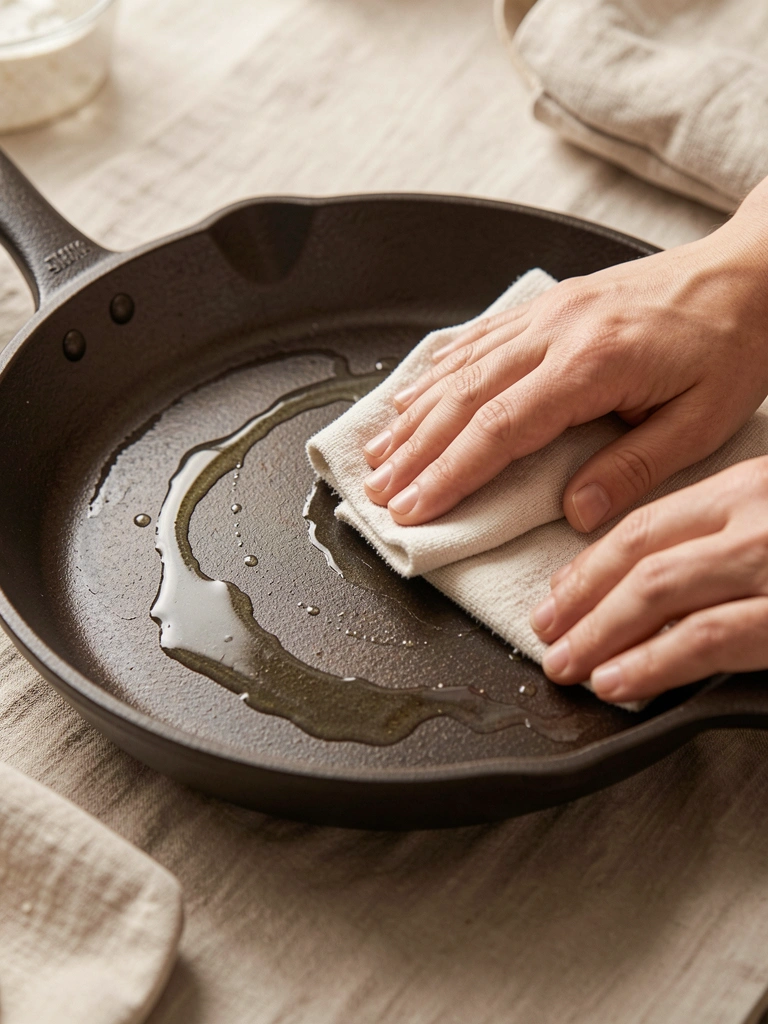
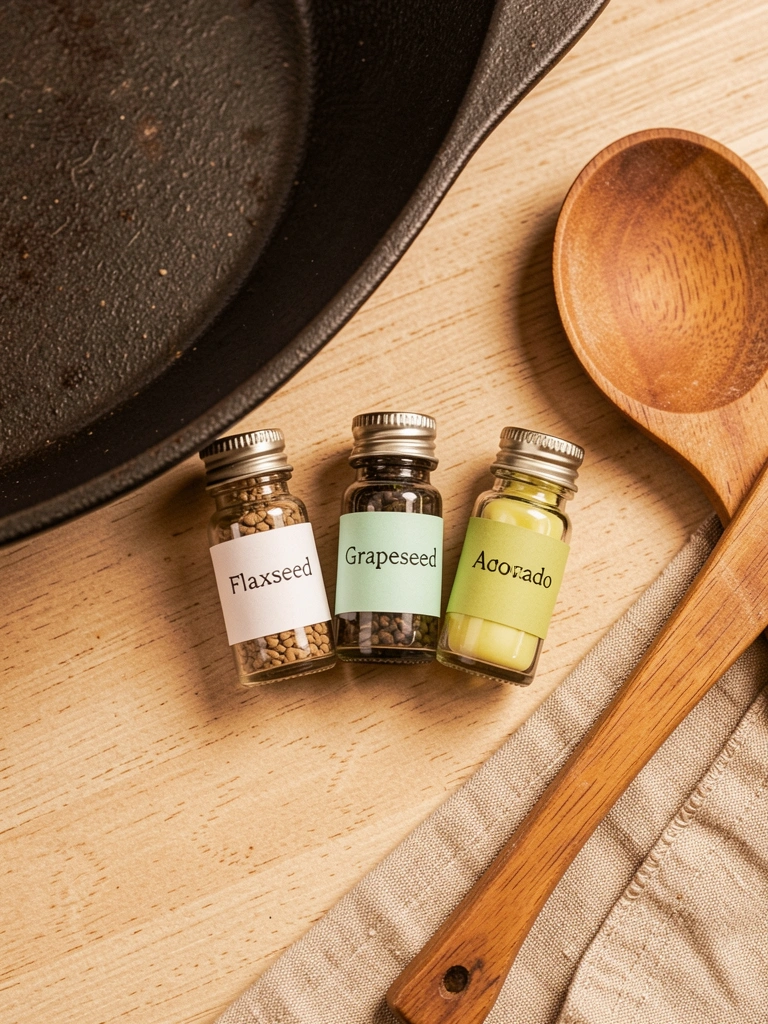
Use a high-smoke-point oil—flaxseed, grapeseed, or avocado oil. Pour a small amount (about 1 teaspoon for a 10–12" skillet) onto the surface and rub it with a lint-free cloth or paper towel until the surface looks dry; the goal is a barely-there sheen. Excess oil is the main cause of sticky, uneven seasoning. Product suggestion: flaxseed oil for seasoning (Amazon affiliate link).
Wipe the underside and handle too; seasoning the whole pan prevents rust. Use tongs and a cloth to avoid burns.
Bake Upside Down
Place foil on the lower rack to catch drips. Put the skillet upside down on the middle rack and bake for 1 hour at 450–500°F. This lets oil polymerize into a hard coating rather than pool. The pan may smoke slightly—vent the kitchen if needed.
After an hour, turn off the oven and let the skillet cool inside the oven to room temperature—about 1–2 hours. Cooling inside prevents thermal shock and helps layers set evenly.
Repeat for Stronger Seasoning
For a brand-new or stripped skillet, repeat the oiling and baking process 2–3 times. Each thin layer builds a darker, more non-stick surface. For maintenance, one quick season (thin coat, 30–60 minutes at 450°F) every few months or after heavy scrubbing keeps the pan in top shape.
Tools that help: oven thermometer (Amazon affiliate link), aluminum foil, lint-free cloths, silicone oven mitts.
Best Oils and Why They Work
Choose oils with a high smoke point and a balance of polyunsaturated fats (for polymerization) and stability. Flaxseed oil polymerizes into a hard, durable layer—excellent for wheelhouse seasoning jobs. Grapeseed and avocado oils are reliable, easy to find, and less likely to smoke excessively during baking.
Avoid butter, olive oil, or unrefined oils for full oven seasoning; they can leave sticky or soft layers. For daily maintenance, a light wipe with a thin coat of cooking oil after cooking is fine.
When To Re-Season
Look for dull patches, rust spots, sticky residue, or food sticking dramatically. Light wear from cooking is normal; deep scratches or rust mean it’s time for a full re-season: strip down to bare metal (steel wool or self-abrasive pad), wash, dry, then apply the multi-layer oven method above.
If the pan feels slightly sticky after a season, bake another thin layer at 450°F for 30–60 minutes. Repeat until the surface is smooth and satin-black.
Common Mistakes to Avoid
- Using too much oil. Thick coats pool and stay tacky—wipe to a thin, nearly invisible sheen.
- Skipping drying. Any moisture causes blisters or uneven seasoning.
- Baking at too-low a temperature. Below 400°F oil may not polymerize properly. Aim for 450–500°F.
- Seasoning over open flame only. Oven heat gives even polymerization across the entire pan surface.
Final Thoughts
You can achieve a durable, non-stick finish by following these exact steps: clean well, apply very thin oil, bake hot, and repeat. Small, consistent layers beat heavy single coats every time.
With the right oil and these cues, your cast iron will reward you with better cooking and easier cleanup for years.