
Butternut squash soup is one of those recipes that feels simple on paper, but when done properly, it delivers far more than expected.
The natural sweetness of butternut squash, the depth from roasting, and the slow blending all come together to create a soup that’s clean, warm, and deeply satisfying.
This is not a rushed version.
This is the kind of butternut squash soup you make when you want real flavor, not shortcuts.
When the squash is roasted properly, it turns soft, golden, and slightly caramelized. That’s what gives roasted butternut squash soup its signature richness.
If you’ve never tried using roasted butternut before blending, this recipe will change how you look at squash forever.
Roasted Butternut Squash Soup
This method follows how many cooks and chefs build flavor from the start.
Roasting first, blending later. No boiling away taste. No flat flavors. Just steady, honest cooking that lets the ingredients do the work.
When roasted butternut squash hits the heat, its natural sugars deepen, and the texture becomes creamy without needing too much cream.
That’s why this version tastes fuller and more balanced.
Ingredients
- 1 large butternut squash, peeled, deseeded, and cut into cubes
- 1 medium onion, sliced
- 3 garlic cloves, whole
- 2 tablespoons olive oil
- 3½ cups vegetable or chicken stock
- ½ cup cream or coconut milk
- Salt and black pepper, to taste
- ½ teaspoon dried thyme or fresh thyme
- Pinch of nutmeg (optional)
Step-by-Step Instructions
1. Roasting the Butternut Squash
Start by preheating your oven to 200°C (400°F). Place the cubed butternut squash, onion slices, and garlic cloves on a baking tray.
Drizzle with olive oil and season with salt and black pepper. Toss everything well so each piece is lightly coated.
Spread the vegetables out in a single layer. This is important.
If they are crowded, they will steam instead of roast. Roast for about 30 to 35 minutes, turning once halfway through.
You’re looking for soft pieces with golden edges.
This roasting step is what gives roasted butternut squash soup its depth and slightly sweet finish.
2. Building the Soup Base
Once the vegetables are roasted, transfer them to a large pot. Add the stock and place the pot over medium heat. Let the mixture simmer gently for about 8 to 10 minutes.
This allows the roasted flavors to blend into the broth without overpowering the natural taste of the squash.
At this stage, the kitchen will already smell warm and slightly sweet.
That’s how you know you’re on the right track.
3. Blending to a Smooth Texture
Turn off the heat and blend the soup until completely smooth. You can use a hand blender directly in the pot or carefully transfer it to a countertop blender in batches.
Take your time here. The smoother the blend, the better the final texture.
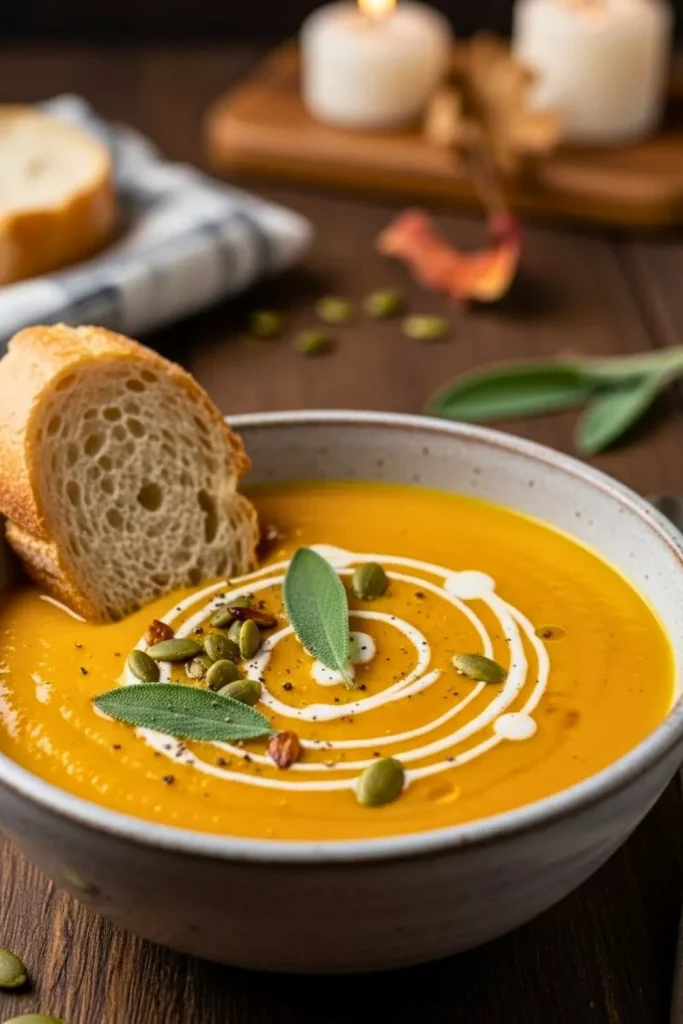
A good butternut squash soup should feel silky, not grainy. If it looks thick and glossy, you’re doing it right.
4. Adding Cream and Final Seasoning
Place the pot back on low heat and stir in the cream or coconut milk. Add the thyme and a small pinch of nutmeg if using.
Taste the soup and adjust salt and pepper as needed.
Let it warm through for another 3 to 4 minutes. Do not boil. Gentle heat keeps the texture smooth and the flavor clean.
Nutrition (Approx. Per Serving)
This soup is naturally nourishing and balanced. One serving provides roughly 210–240 calories, with healthy carbohydrates from the squash, moderate fats from the olive oil and cream, and a good amount of fiber.
It’s filling without being heavy, which is why many people love it as both a starter and a light main.
PinnedDrinks Secret
Here’s a small trick used in professional kitchens.
After blending, let the soup rest for 5 minutes before serving. This allows the texture to settle and the flavors to come together.
It sounds simple, but it makes the soup taste more rounded and finished.
This is the kind of detail a chef pays attention to, and it’s what gives your homemade soup a polished feel.
Why Roasting Changes Everything?
When butternut squash is boiled, it softens, but the flavor stays mild. When it’s roasted, it becomes deeper, slightly sweet, and more complex.
That’s why roasted butternut squash is always the better choice for soup.
The edges caramelize. The inside turns creamy.
And the overall taste becomes fuller without adding anything extra. That’s the power of heat done right.
How Texture Affects the Final Result?
Texture is just as important as flavor in butternut squash soup. If the soup is too thick, it feels heavy. If it’s too thin, it feels flat.
The goal is a smooth, pourable consistency that coats the spoon lightly.
If it becomes too thick, add warm stock a little at a time. If it’s too thin, let it simmer uncovered for a few minutes. Small adjustments make a big difference.
Serving It the Right Way
This soup doesn’t need complicated garnishes.
A drizzle of cream, a few toasted seeds, or a piece of crusty bread on the side is more than enough. The flavor of the roasted butternut squash soup should be the focus.
It works well as a starter, but it’s also satisfying enough to stand on its own.
Final Thoughts
This Butternut Squash Soup is built on simple steps done properly. Roasting first, blending slowly, and seasoning carefully.
That’s it. No shortcuts. No heavy tricks.
When you let the roasted butternut squash do the work, the soup becomes naturally rich, smooth, and comforting. It’s the kind of recipe that feels calm to make and even better to eat.
If you’re collecting reliable, high-quality soup recipes, this one earns its place.


