Kombucha has become a popular drink over the past few years, thanks to its unique taste and health benefits.
It’s packed with probiotics that support gut health and can be made easily at home.
Making kombucha from scratch not only saves you money, but it also allows you to customize the flavor to your liking.
Crafting your own kombucha at home isn’t as difficult as it might seem.
All you need is a few basic ingredients and some patience. In this guide, I’ll walk you through the steps to make your own homemade kombucha.
How To Make Kombucha
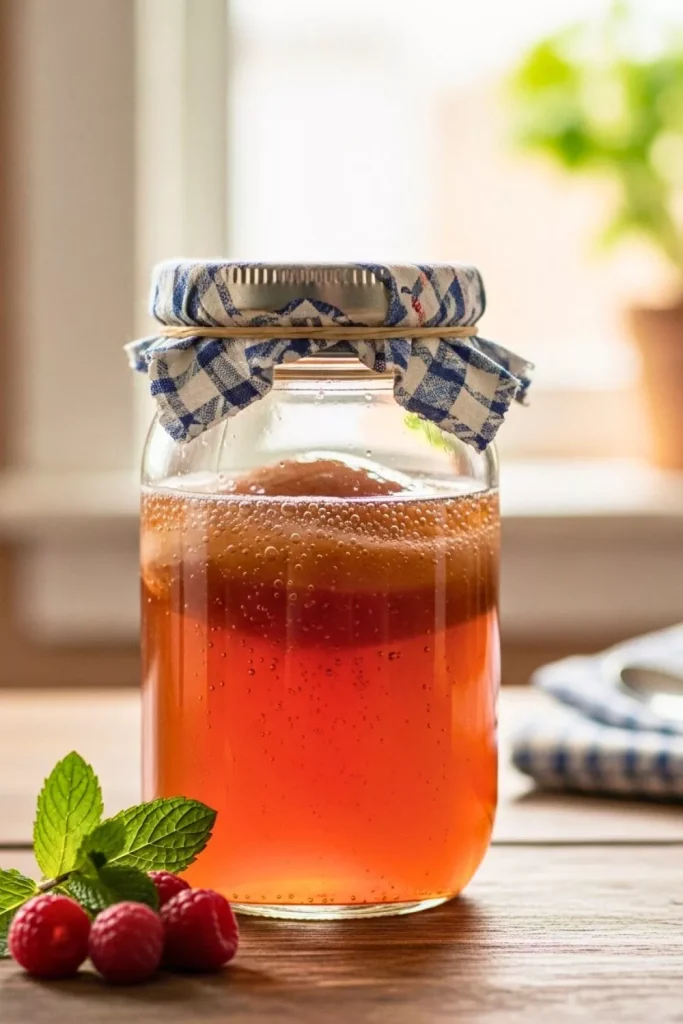
Kombucha is a fermented tea that’s slightly tangy and effervescent. It’s made by fermenting sweet tea with a symbiotic culture of bacteria and yeast (SCOBY). Over time, the fermentation process converts sugars into beneficial acids and probiotics.
Ingredients
- Black or Green Tea: The base for your kombucha. Black tea tends to give a stronger flavor, while green tea offers a milder taste.
- Sugar: Regular white sugar is the main food for the SCOBY during fermentation. It’s essential for fermentation to occur.
- SCOBY (Symbiotic Culture of Bacteria and Yeast): The culture responsible for fermenting the tea. You can buy a SCOBY or get it from a friend who brews kombucha.
- Starter Tea: This is kombucha from a previous batch or store-bought kombucha. It helps to lower the pH and jump-start the fermentation process.
- Filtered Water: Always use filtered water to avoid chlorine, which can harm the SCOBY.
Step-by-step Instructions
1. Brew the Tea
Boil 4 cups of water and dissolve 1 cup of sugar in it. Once the sugar is completely dissolved, add 4-5 tea bags or 4-5 teaspoons of loose-leaf tea.
Let the tea steep for 15-20 minutes, then remove the bags or strain the loose tea.
2. Cool the Tea
Allow the sweetened tea to cool to room temperature. This step is crucial because hot tea can kill the SCOBY.
3. Prepare the Fermentation Jar
In a clean glass jar (about 1-gallon size), pour the cooled tea.
Add 2 cups of starter tea from a previous batch or store-bought kombucha to help balance the pH level.
4. Add the SCOBY
Carefully add the SCOBY to the jar of tea.
It may sink at first, but don’t worry—it will float back up as the fermentation process begins.
5. Cover the Jar
Cover the jar with a clean cloth or paper towel and secure it with a rubber band.
This allows air to flow in while keeping dust and debris out.
6. Ferment
Place the jar in a warm, dark place, away from direct sunlight. Allow the tea to ferment for about 7-14 days, depending on how strong you want your kombucha.
The longer it ferments, the more acidic and less sweet it becomes.
7. Taste Test
After 7 days, begin tasting the kombucha daily. Once it reaches the flavor you like, remove the SCOBY and set it aside for your next batch.
The remaining kombucha is ready to drink or for a second fermentation.
8. Second Fermentation (Optional)
To add extra flavor, pour the kombucha into bottles and add your favorite fruits, herbs, or spices.
Seal the bottles and let them ferment for an additional 2-5 days.
This will give the kombucha a fizzy and flavored kick. Strawberry, ginger, and mint are popular choices.
9. Refrigerate and Enjoy
Once your kombucha has reached the desired flavor and carbonation, store the bottles in the refrigerator to stop fermentation.
Now your homemade kombucha is ready to enjoy!
Nutrition
- Calories: 30-50 per cup
- Carbs: 6-8g per cup
- Probiotics: Rich in beneficial bacteria for gut health
- Caffeine: Contains a small amount of caffeine, depending on the tea used
PinnedDrinks Secrets
- Cleanliness is Key: Always ensure that your equipment is thoroughly cleaned before brewing to avoid contamination.
- Temperature Control: Keep your kombucha at a consistent temperature (68-85°F) for optimal fermentation.
- Avoid Metal: Do not use metal containers or utensils with kombucha as they can react with the acidic nature of the drink.
- Experiment with Flavors: The second fermentation is your chance to get creative! Add fruits, herbs, and spices to make unique flavors.
- Use a Starter Tea: This is a must to ensure the fermentation process starts correctly and helps the SCOBY thrive.
Health Benefits of Kombucha
Kombucha offers numerous health benefits, thanks to its probiotics, which support digestion and gut health.
The fermentation process also produces organic acids that help detoxify the body.
Additionally, kombucha contains antioxidants from tea, which fight inflammation and oxidative stress.
It also aid weight management and improve energy levels with its natural caffeine content.
Serving Ideas for Kombucha
Kombucha can be enjoyed in many ways, not just as a standalone drink.
- Straight from the Bottle: Serve chilled over ice for a refreshing drink.
- Smoothie Boost: Add to smoothies for a probiotic-rich twist.
- Mocktails: Use as a base for non-alcoholic drinks with mint, juice, and berries.
- Pair with Food: Perfect with cheese, grilled meats, or spicy dishes for a balanced meal.
Final Thoughts
Making kombucha at home is an enjoyable and rewarding process.
Not only do you get to enjoy a refreshing and gut-healing beverage, but you also have full control over the ingredients and flavors.
Whether you’re looking for a DIY drink to impress guests at an Easter gathering or simply want a healthier option to enjoy daily, homemade kombucha is a great choice.
With just a little practice and patience, you’ll be crafting your own kombucha recipes in no time.